
Everest Base Camp Trek
Everest Base Camp Trek
Everest Region
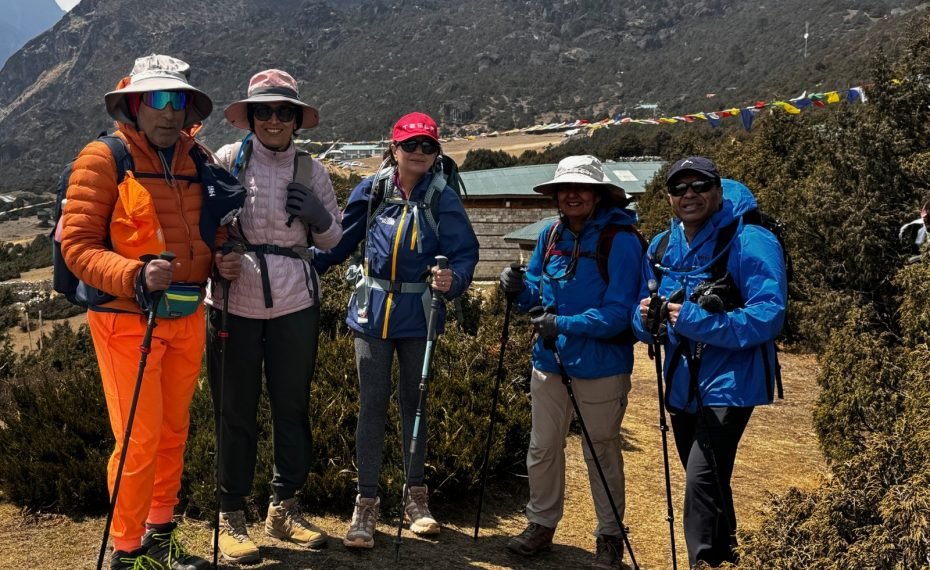
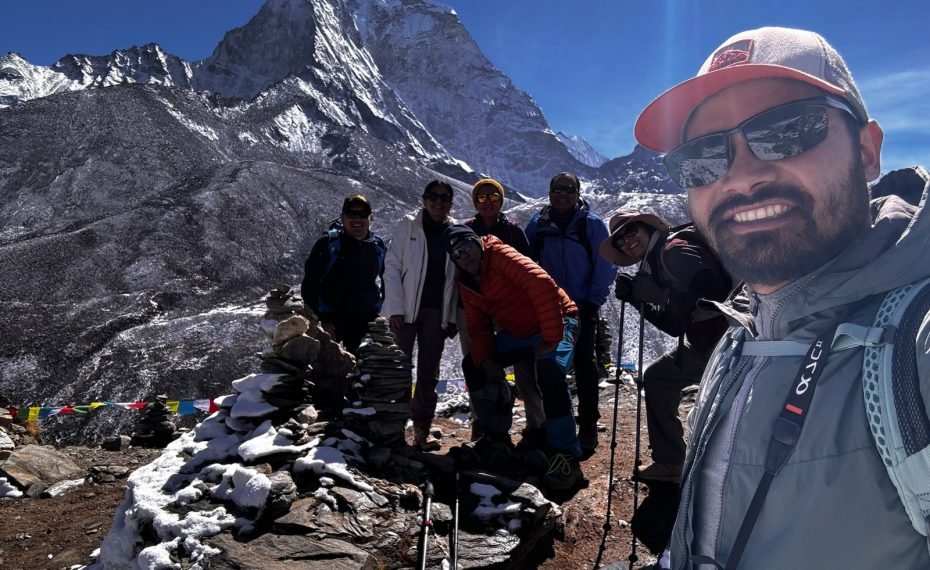
Overview
Everest Base Camp offers adventure seekers an unforgettable Himalayan journey. While Mt Everest remains the primary draw, this trek delivers equally compelling experiences. Spectacular mountain panoramas unfold continuously throughout the route, revealing nature’s grandeur at every turn. The trek also provides intimate encounters with Sherpa culture and traditions, offering genuine insight into their resilient mountain lifestyle and centuries-old customs that have sustained communities in this challenging environment.
The adventure begins with a thrilling flight from Kathmandu to Lukla’s mountainside airstrip. Trekking from Lukla through charming villages along the Dudh Koshi River, towering peaks like Thamserku and Kusum Kanguru dominate the skyline. Namche Bazaar, the bustling Khumbu capital, provides essential acclimatization time while immersing trekkers in authentic Sherpa heritage. Continuing to Tengboche rewards visitors with breathtaking views of Everest, the imposing Lhotse-Nuptse Wall, elegant Ama Dablam, and Kantega’s distinctive summit.
Tengboche transcends mere scenic beauty, holding profound spiritual significance for the Sherpa people. The revered Tengboche Monastery stands as one of their holiest sites, where monks maintain ancient Buddhist traditions. Beyond Tengboche, the trail winds through additional villages, each revealing deeper layers of cultural richness, spiritual devotion, and natural magnificence. This remarkable region weaves together stunning landscapes, living traditions, and warm hospitality into a truly transformative experience.
Itinerary
Welcome to Kathmandu, the capital and cultural hub of Nepal! We’ll be waiting with a warm greeting and easy transfer to your hotel. Plan on an evening briefing on last-minute specifics about your trek and an early lights-out: you have a big day ahead.
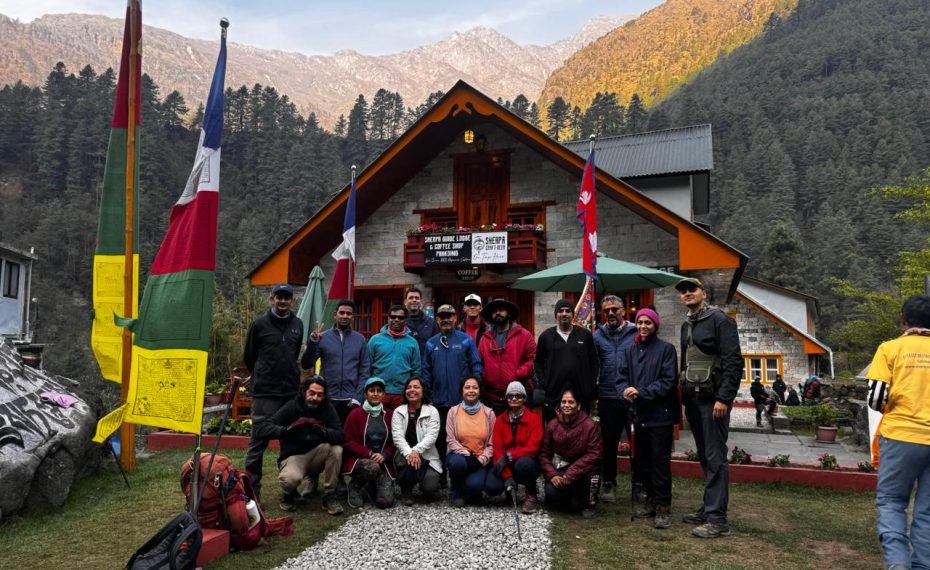
A short morning flight to Lukla, where you’ll be introduced to your guide and porter. Kick off your trek with an easy walk through Chaurikharka village and descent towards Dudhkoshi Ghat (2,530 m/8,300 ft). The trail follows the bank of the Dudhkoshi River until Phakding (2,652 m/8,700 ft), where we will be staying for the night to acclimatize. Enjoy your free time in Monjo/Phakding, a popular stopping point. (B, L, D)
Walking through a beautiful pine forest, the track leads us along the Dudh Koshi River through many suspension bridges, one of which is the famous Hillary Suspension Bridge. First, we catch a wonderful prospect of the glistening Mt. Thamserku (6618 m). Through the settlement of Benkar, Chumoa, and Monjo, we come to the check post and entrance to Sagarmatha National Park. We pass through the last village of Jorsale before reaching Namche Bazaar. The trail climbs through the forests and bridges until we reach the confluence of the Dudh Koshi and Bhote Koshi rivers. After a final steep ascent of about two hours, we get our first sight of Mt. Everest peering over the Lhotse-Nuptse ridge. Upon this juncture, we stop at Chautara to admire the view. We still need to hike about 1.5 hours to reach Namche Bazaar, a gateway to Mt. Everest and the main trading center of this region. We stay overnight in Namche Bazaar. (B, L, D)
Today we will spend time resting, visiting around, or perhaps making new friends. There’s an optional 2-hour hike to Everest View Point, an uphill walk that will help speed acclimatization. Otherwise, spend the day exploring Namche Bazaar. Check out the Sherpa museum for an overview of the Sherpa culture and history of mountaineering. (B, L, D)
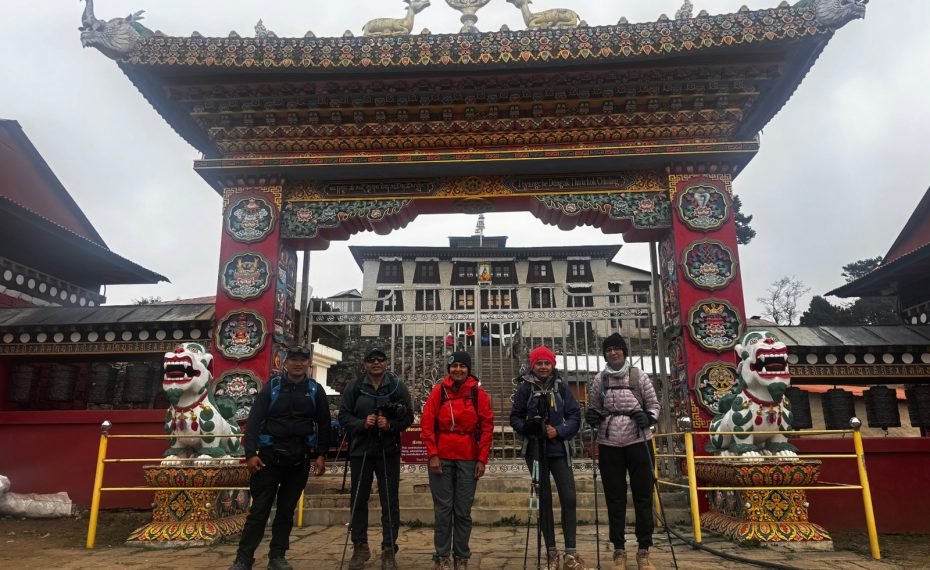
After breakfast in Namche, we start our trek towards Tengboche, enjoying superb views of Mt. Everest, Nuptse, Lhotse, Ama Dablam, and a close-up view of Thamserku. Our trek follows the gradual trail with few ups and downs overlooking the magnificent view of the great Himalaya. Along the way we can spot wildlife like pheasants, musk deer, or a herd of Himalayan Thar. The trail goes gradually down up to Kayangjuma. The path eventually reaches Sansa, which is the major trail junction to Gokyo Valley and Everest Base Camp. The track then follows through the pine forests, and after we cross the prayer-flag-festooned bridge over the Dudh Koshi River, we reach Phunki Thenga, a small settlement with a couple of teahouses and a small army post amidst the alpine woods. After having a relaxed lunch at Phunki Thenga, we then have a little tough climb steep up through the pine forests before we reach Tengboche. Tengboche is a great place for close-up views of Ama-Dablam, Nuptse, and Everest, and it has the biggest Buddhist monastery in the Khumbu region. We pay our visit to the monastery the same day at around 3 p.m. to witness the ceremony in the principal and popular monastery of the Everest region. Overnight stay at the lodge at Tengboche. (B, L, D)
Our trek today kicks off with a walk through the rhododendron forest to Deboche, followed by a bridge over the raging Imja Khol River. We’ll pass the valley wall and then traverse the plains to Pangboche village, the biggest settlement of Sherpas in the region. Enjoy a great opportunity to observe a typical Sherpa village and have lunch with the locals! The intrepid can brave a brief hike to the Pangboche monastery, one of the oldest in the area. Our afternoon trek will be a difficult one, as the landscape gives way to dry, deserted mountains and we hike towards Dingboche. (B, L, D)
On this exciting day, embark on a scenic hike to the stunning Chhukung Valley, known for its breathtaking views of surrounding peaks, including Island Peak and Lhotse. The valley offers a unique perspective of the Khumbu region, with impressive glaciers, alpine meadows, and a sense of serenity away from the more frequented routes. After exploring, return to Dingboche for the night, where you can rest and enjoy hearty meals in this charming village nestled at 4,410 m (14,468 ft). (B, L, D)
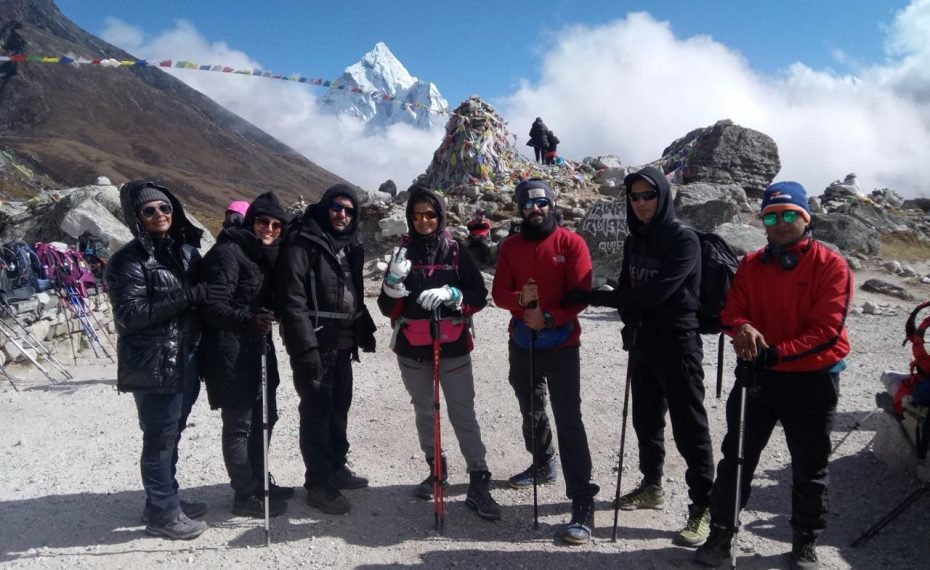
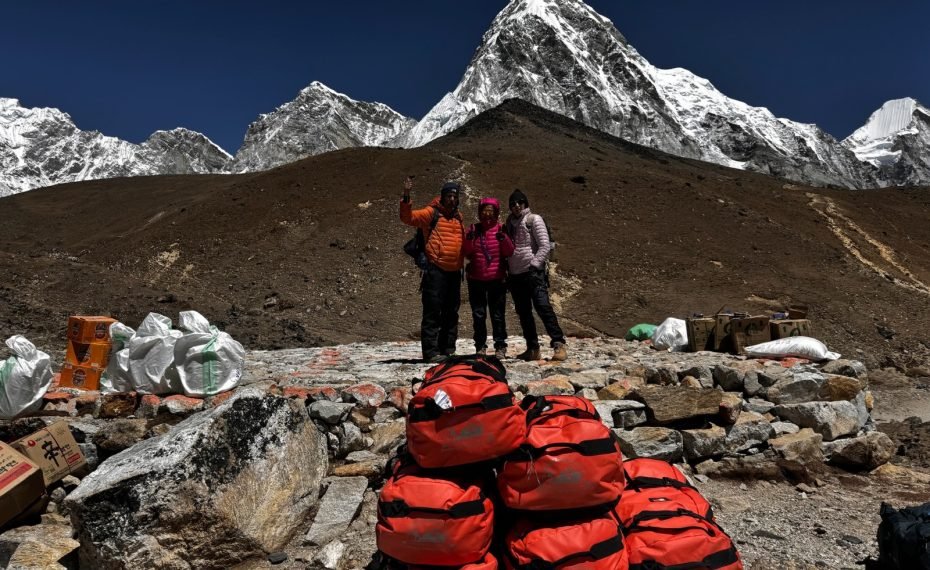
Beyond Dingboche, we climb up the steep terminal moraine of the Khumbu Glacier. We pass through boulder-strewn slopes as we ascend Chupki Lhara, an eerie ridge top with dramatic mountain views. At the top of the ridge, we will find an array of stones with prayer flags used as memorials to Scott Fischer (American mountaineer) and 10-time Everest submitter Babu Chiri Sherpa (a Nepali mountain guide), who perished on a mission to climb Everest. As the trail drops to the Khumbu Glacier moraine, we find ourselves facing several great peaks—Khumbutse, Lingtren, Pumori, and Mahalangur Himal. We are now in the vicinity of Everest, but the great mountain still remains elusive. Mt. Nuptse towers to the right as the trail crosses the Khumbu Glacier. As we pass along a murmuring stream, leaving the Khumbu Glacier behind, we now begin to feel a little out of breath due to the high altitude. Overnight at Lobuche. (B, L, D)
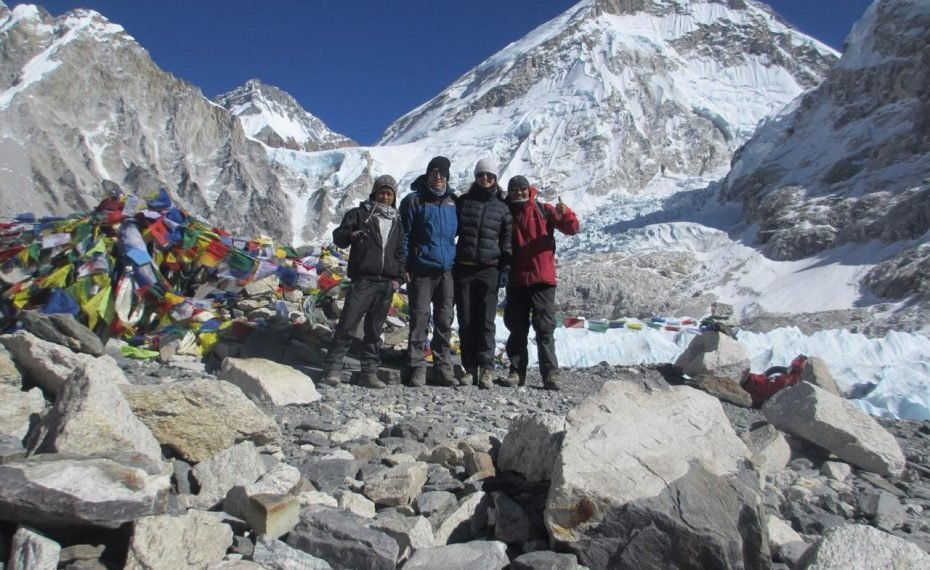
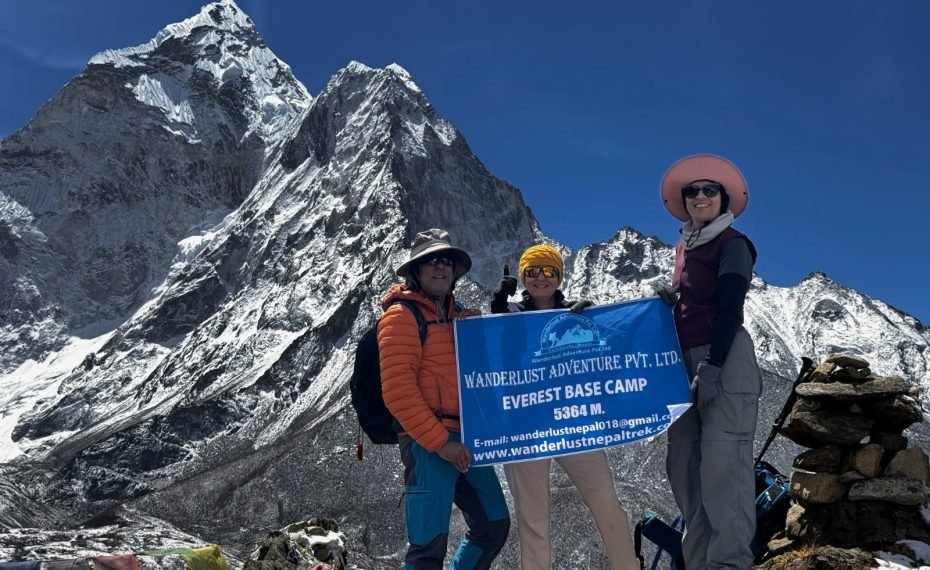
The trail to Gorak Shep goes ahead through the lateral moraine of the Khumbu Glacier. We pass through the pyramid signpost. Ahead on the trail we see the crest of the north ridge of Everest along with Mt. Pumori, Mt. Mahalangur, Mt. Lingtern, Mt. Khumbutse, Mt. Nuptse, etc. A small ascent would take us to Thangma Riju, from where we perceive a 360-degree vista of snowy mountains. Climbing steeply up to the top through the torrent of Changri Glacier, we catch our first glimpse of Kala Patthar, a grey-green knoll beneath Mt. Pumori. As we reach Gorak Shep, we will find snow-capped mountains looming all around us, including the top of the world—Mt. Everest. After a brief lunch and rest, we take the trail to Everest Base Camp through the once vast Gorak Shep Lake. Continuing straight ahead, we come through the Indian army mountaineers’ memorials. Only upon reaching the Everest Base Camp do we really appreciate the Everest climbers who brave the hazardous route through the Khumbu icefall. Mountaineers’ tents stand out in bright colors against the monotony of gray surroundings (especially in the spring). Nuptse, Khumbuste, and Pumori are the mountains we can view from the base camp. Everest actually is not visible from here. By now we have met the ultimate objective of our trip.
However, the sunset view from Kala Patthar is more admirable than the sunrise view, so it is suggested to visit Kala Patthar today during sunset. As the setting sun’s rays strike the snow capped mountains the resulting scenery is indescribable. For those trekkers who wish to continue to Kala Patthar, our guides and Sherpas coordinate hiking to Kala Patthar for an amazing sunset view today rather than waiting until the next day. Overnight in Gorak Shep at a local lodge. (B, L, D)
We’ll wake before dawn today to trek towards Kalapathar (which means “black rock”) for a fiery, glorious sunrise over Mt. Everest. The day’s first light will illuminate your spectacular view of Nuptse Nup, Changtse, and Lhotse. This may be, of the whole journey, your most opportune moment to snap amazing pictures of Everest and its neighboring peaks. Afterwards, it’s back to Gorekshep for breakfast and down in the direction of Pheriche, our nighttime stop. Our pace will be a lot brisker as we descend, and the walking is easier going this way. (B, L, D)
Begin your day with a scenic trek toward the beautiful Sherpa village of Phortse, situated at 3,440 m (11,284 ft). The trail offers peaceful forest paths, dramatic mountain vistas, and a chance to spot local wildlife along the way. Covering approximately 9–10 km over 5–6 hours, the journey is steady and rewarding as you descend from the busier main trail into this quieter, culturally rich village. Enjoy warm Sherpa hospitality and traditional meals as you settle in for the night. (B, L, D)
The trail descends steeply downward, so we need to walk slowly and under control as our shaky legs continuously battle the rocky terrain. After crossing the suspension bridges over the fast-flowing Dudh Koshi and its tributaries, the trail becomes more level and natural. By today we start to get warmed up by the light breeze. Any remaining sore throats and colds will be gone by today as we pass through this charming mountain air. Although we are travelling the same route down, we feel completely different views. We snap a mixture of open plains, rhododendron and pine forests, and in the distance, snow-covered peaks. We walk through the Sherpa villages, noticing impressive faith in Buddhism and the culture of prayer stones and prayer flags while we walk through the villages. Upon arrival in Lukla, we stretch those sore legs and recall the experiences of the last couple of weeks. We experience the culmination of a fantastic trek on a happy note with everyone back safe and sound with smiles on their faces! Overnight in Lukla. (B, L, D)
Our arrival in Lukla brings an evening in our last tea house and, traditionally, a party with your trekking crew: you made it! Thanks to great teamwork and perseverance, you’ve accomplished a physical feat of which others only dream. This is your last night on the mountain, which can be bittersweet (B, L, D).
In the morning, you’ll hop a brief flight from Lukla to Kathmandu, where your journey both began and ends. You’ll transfer to your hotel upon landing for some much-needed solo rest and reflection after your trek conquering the Himalayas. We’ll reunite in the evening for a farewell dinner at one of the best Nepalese restaurants in town, where we’ll be eager to hear your feedback on the trip.
Cost Included
- All domestic flight, hotel/airport transfer
- All ground transportation by private vehicles
- 12 B,L,D Lodging + Breakfast while return flight
- Experienced Local Guide and Porter
- All necessary paper works and permits
- All government and local taxes if necessary
Cost Excluded
- Nepal Visa fee (International airfare to & from home city)
- Excess personal baggage charges beyond 25kgs
- Hotel, Lunch & evening meals during Kathmandu stay
- Travel & rescue insurance
- Personal expenses e.g. phone calls, laundry, bar bills etc.
- Gratuity for staffs
- Optional trips and sightseeing if extend